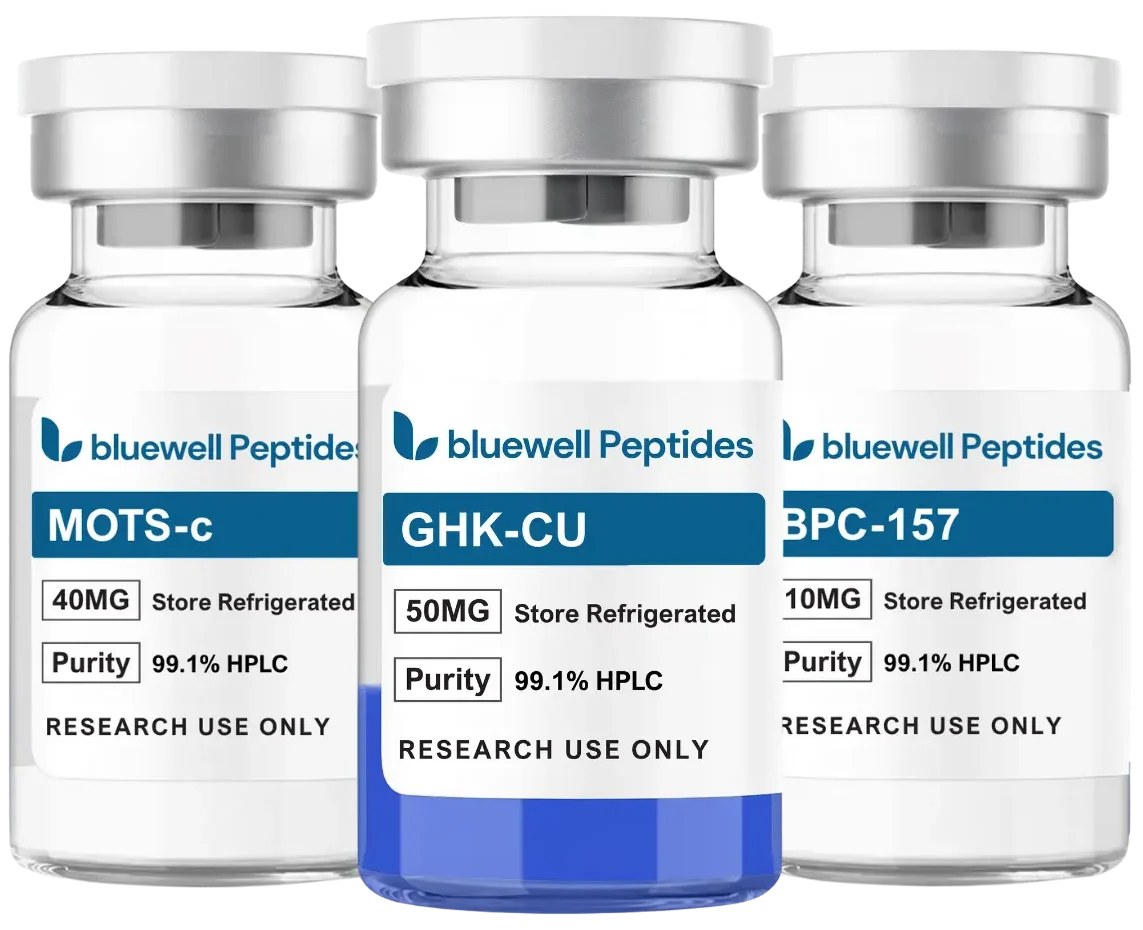
Bluewell Peptides delivers high-purity research peptides for laboratory, analytical and scientific research, with product information and available batch documentation. Next day UK delivery & tracked worldwide shipping available.
Laboratory research tool only.
This calculator is provided solely for general laboratory concentration
and sample-volume calculations. It does not provide dosing, administration,
reconstitution, medical, veterinary or therapeutic guidance. Products
supplied by Bluewell Peptides are not intended for human or veterinary use.
Calculations are mathematical estimates only. Researchers are responsible
for independently verifying calculations, laboratory procedures, material
compatibility and experimental protocols before use.
At Bluewell Peptides, The Blue Standard is our commitment to clear product information, traceability, and consistent research-focused service.
We supply peptide materials for laboratory, analytical, and scientific research, with batch information and analytical documentation provided where available.
Our focus is simple: clear specifications, reliable fulfilment, responsible handling, and straightforward access to product documentation.
Researchers can review available Certificates of Analysis and batch information before ordering, helping them make informed decisions based on the specific material they require.
All Bluewell products are supplied strictly for laboratory and scientific research purposes. We do not market or supply our products for human or veterinary use, medicinal use, or therapeutic applications.
UK-based supplier of peptide materials for laboratory,
analytical and scientific research.
UK-Based Research Supplier
Bluewell Peptides supplies research peptide materials
to customers across the UK and selected international
destinations.
Clear Product Information
Product pages provide specifications, research context
and supporting information to help researchers review
available materials.
COA Documentation
Analytical documentation and Certificates of Analysis
are available for products and batches where provided.
UK Order Fulfilment
Eligible orders are processed promptly, with tracked
UK delivery options available at checkout.
International Delivery
Tracked international shipping options are available
for selected destinations and services.
Secure Checkout
Available payment options are displayed securely during
checkout and may vary by order type and destination.
Product & Order Support
Our UK-based support team can assist with orders,
product information and available documentation.
Research-Focused Supply
Bluewell products are supplied for laboratory,
analytical and scientific research purposes only.
Research Use Notice:
Bluewell does not market or supply its peptide products for
medicinal, therapeutic, diagnostic, human or veterinary use.
← Swipe for more →
Research Peptides FAQ
Information about Bluewell Peptides, research peptide materials,
Certificates of Analysis, laboratory storage, ordering and
research-use requirements in the UK.
What are research peptides?
Peptides are chains of amino acids that are widely studied
in laboratory research. Different peptide materials are used
to investigate biochemical pathways, receptor interactions,
cellular signalling and other research questions.
Products supplied by Bluewell are offered for laboratory,
analytical and scientific research purposes only.
What is a Certificate of Analysis (COA)?
A Certificate of Analysis is an analytical document associated
with a particular research material or batch.
Depending on the testing performed, a COA may contain information
such as analytical purity results, identification data, batch
references or other laboratory observations.
Why is batch information useful?
Batch identifiers help researchers connect a product with the
documentation and analytical information supplied for that
particular material or production run.
How can I check available analytical documentation?
Product pages may include specifications, research context,
batch information and available analytical documentation.
Information provided varies depending on the individual material.
Why do Bluewell products state “research use only”?
Bluewell supplies its peptide products as laboratory and scientific
research materials. We do not market or supply these products for
medicinal, therapeutic, diagnostic, human or veterinary use.
Research Use Notice:
Bluewell products are supplied for laboratory, analytical and
scientific research purposes only.
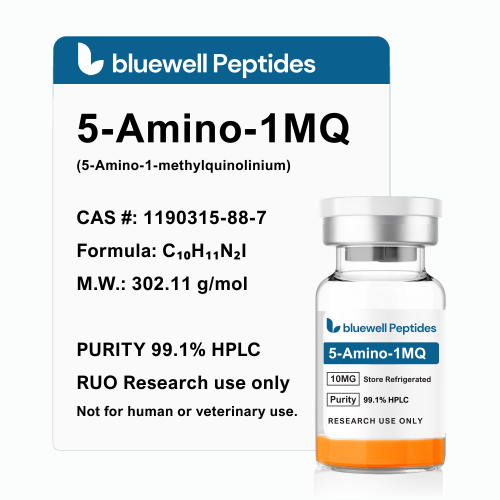
5-Amino-1MQ – NNMT research
A research compound commonly studied in laboratory models
involving nicotinamide N-methyltransferase (NNMT) and related
biochemical pathways.
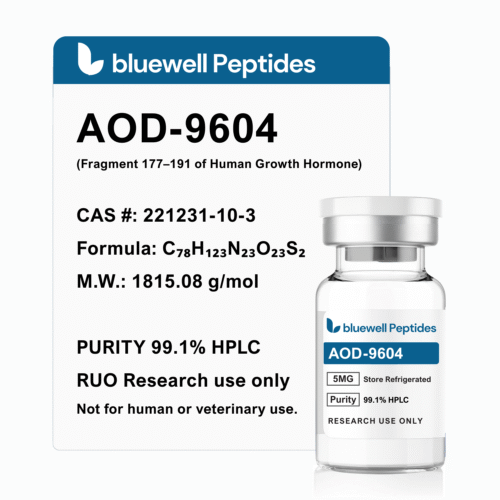
AOD 9604 – peptide fragment research
A peptide fragment used in laboratory research investigating
peptide signalling and metabolic pathway models.
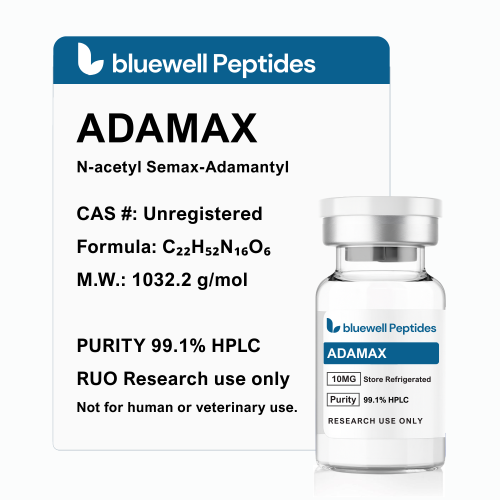
Adamax – melanocortin pathway research
A research material studied in experimental models involving
melanocortin receptor pathways.
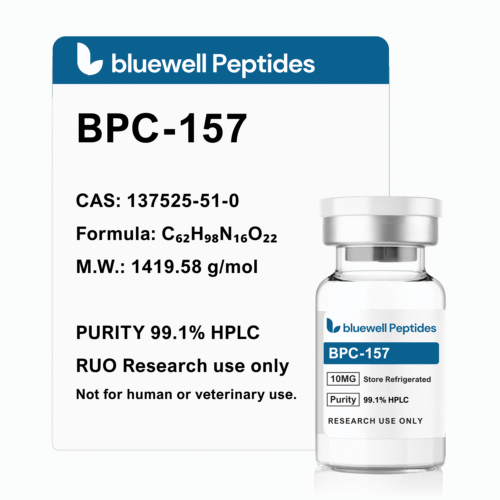
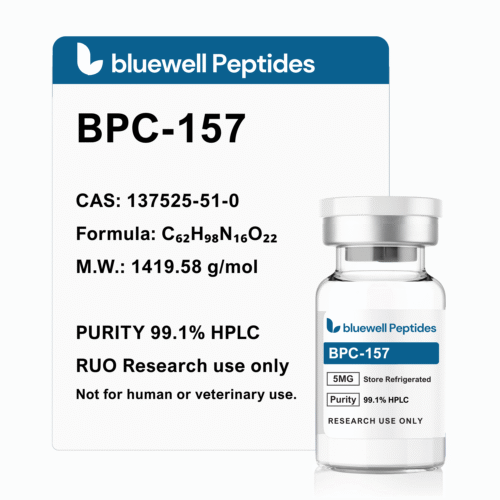
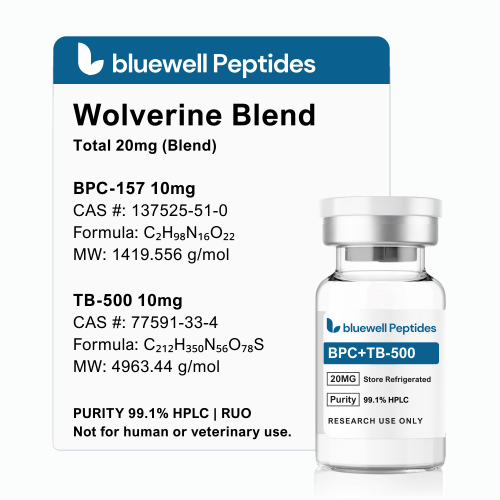
BPC-157 – peptide signalling research
BPC-157 is studied in preclinical laboratory models involving
peptide signalling, cellular responses and related biological
pathways.
Cagrilintide – amylin pathway research
A peptide investigated in laboratory research involving amylin
receptor signalling and related biological pathways.
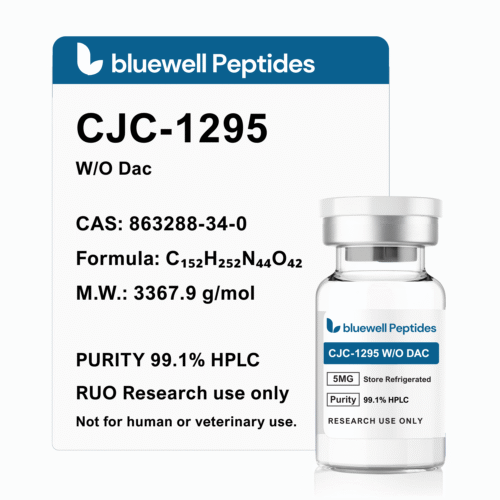
CJC-1295 No DAC – GHRH analogue research
A research peptide used in experimental models investigating
growth hormone-releasing hormone signalling.
CJC-1295 With DAC – GHRH analogue research
A modified peptide studied in laboratory models involving
GHRH-related signalling and peptide-binding characteristics.
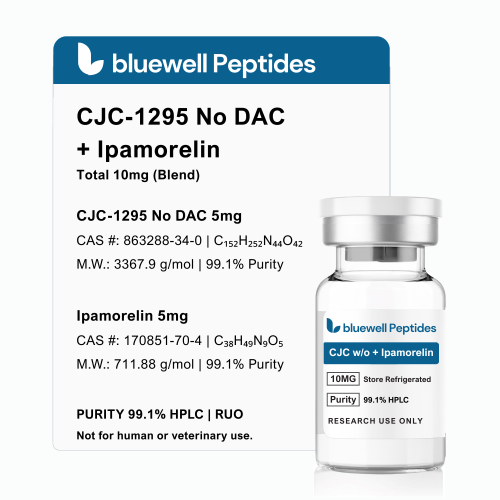
CJC-1295 No DAC + Ipamorelin – research blend
A multi-peptide research blend supplied for laboratory studies
involving GHRH and ghrelin-receptor-associated signalling.
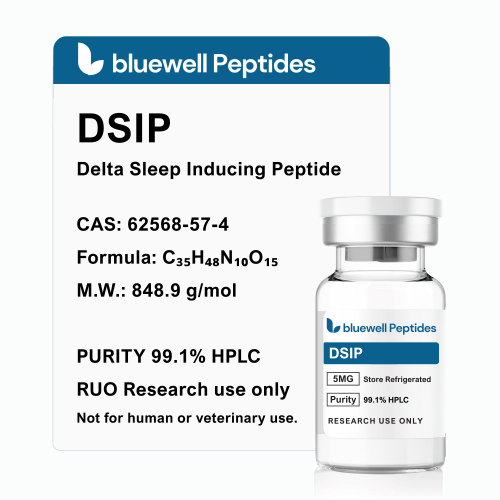
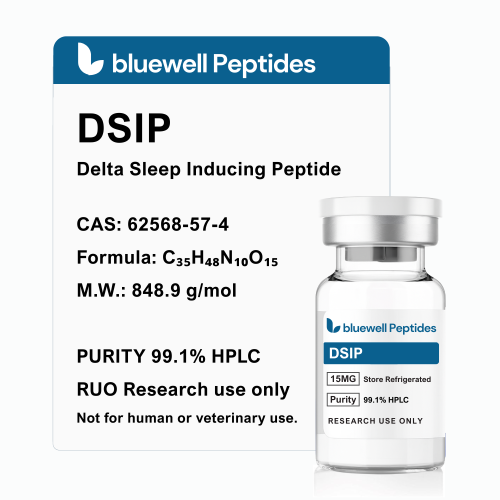
DSIP – peptide research
DSIP is a peptide that has been investigated across a range
of experimental and biochemical research models.
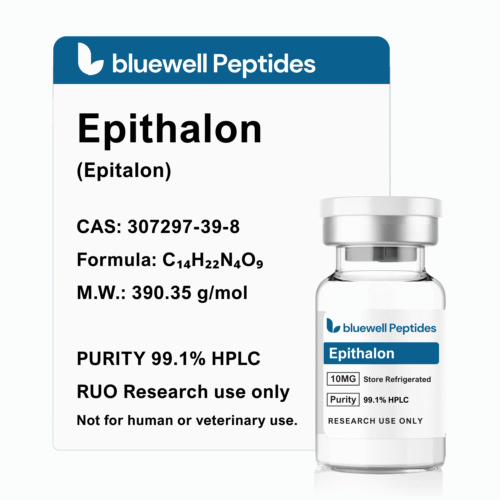
Epithalon – tetrapeptide research
A synthetic tetrapeptide used in experimental research involving
cellular and biochemical pathway investigation.
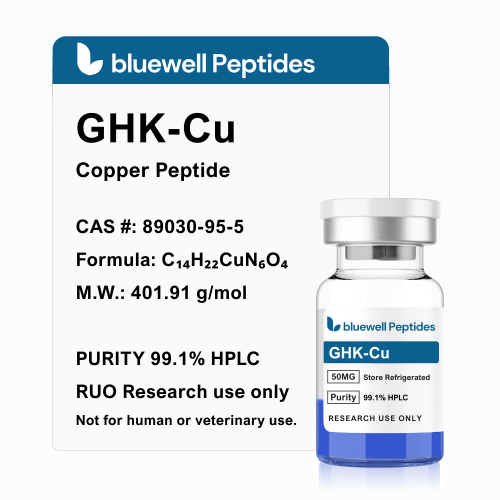
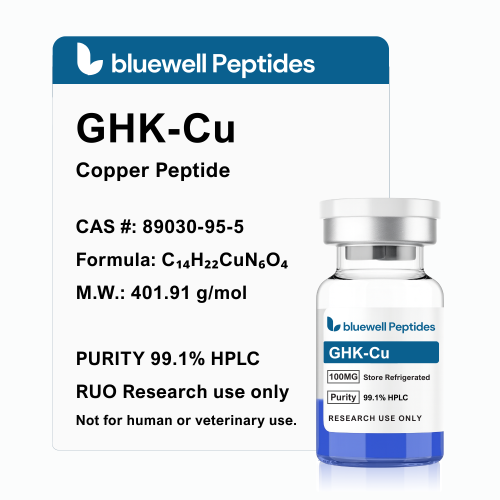
GHK-Cu – copper peptide research
A naturally occurring copper-binding peptide studied in laboratory
research involving peptide–metal interactions and cellular
signalling.
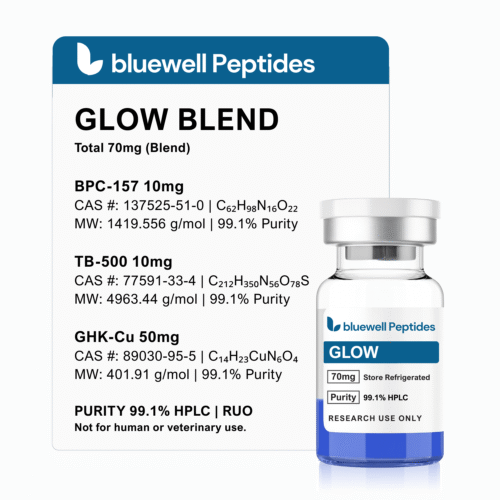
Glow Blend – multi-peptide research blend
A laboratory research blend containing BPC-157, TB-500 and GHK-Cu
for multi-component peptide research.
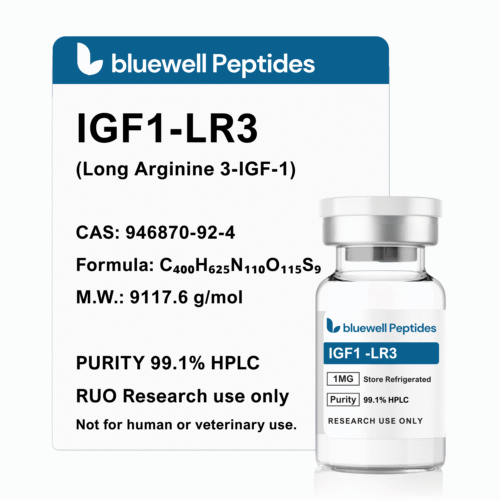
IGF-1 LR3 – growth factor pathway research
An IGF-1 analogue studied in controlled laboratory models involving
growth-factor receptor signalling.
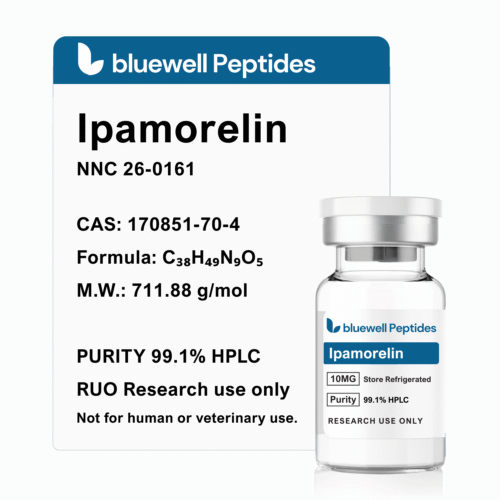
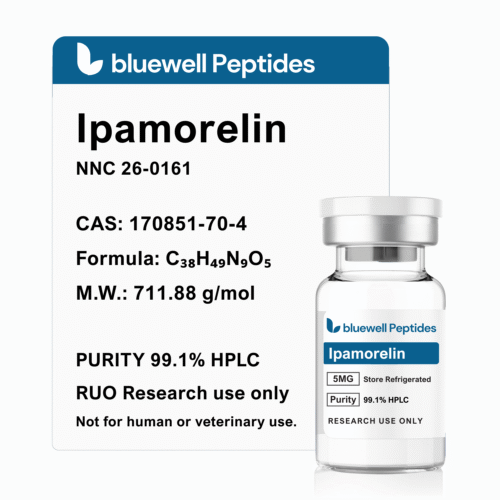
Ipamorelin – ghrelin receptor research
A research peptide investigated in laboratory models involving
ghrelin-receptor and endocrine signalling pathways.
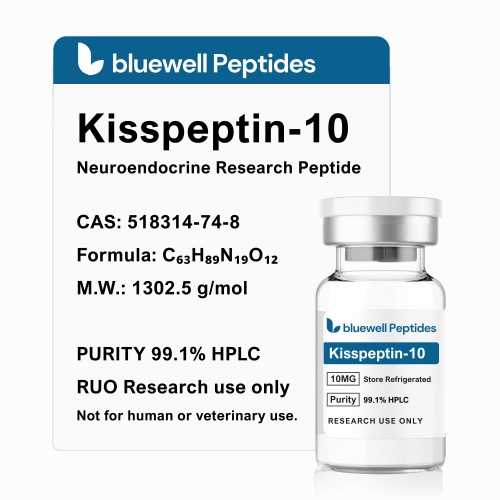
Kisspeptin-10 – neuroendocrine pathway research
A peptide studied in laboratory research involving kisspeptin
receptors and neuroendocrine signalling.
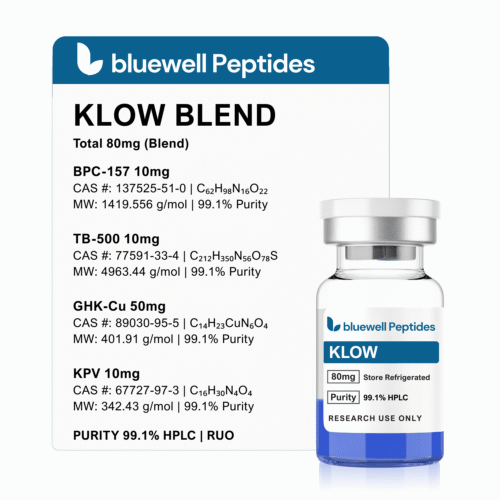
KLOW Blend – multi-peptide research blend
A laboratory research blend containing BPC-157, TB-500,
KPV and GHK-Cu.
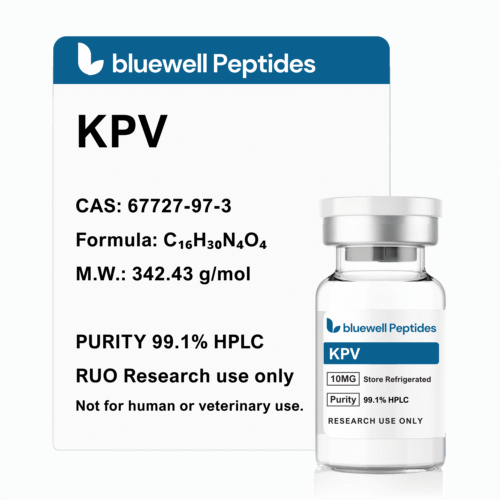
KPV – peptide signalling research
A short peptide investigated in experimental models involving
cellular and signalling pathways.
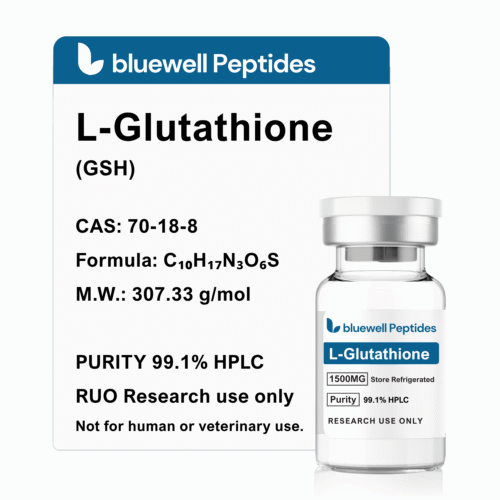
L-Glutathione – redox research
A biological molecule widely studied in laboratory research
involving cellular redox chemistry and oxidative processes.
LL-37 – host-defence peptide research
A naturally occurring peptide studied in laboratory models
involving host-defence and cellular signalling mechanisms.
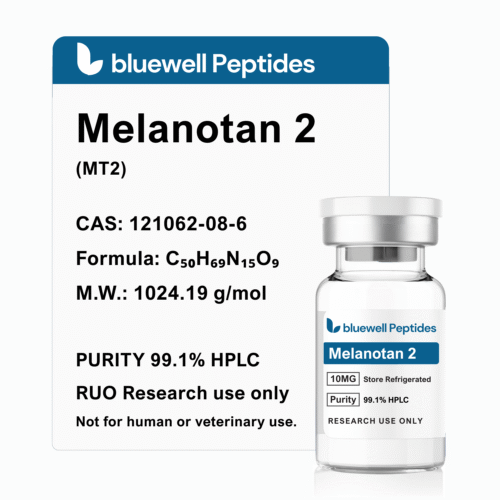
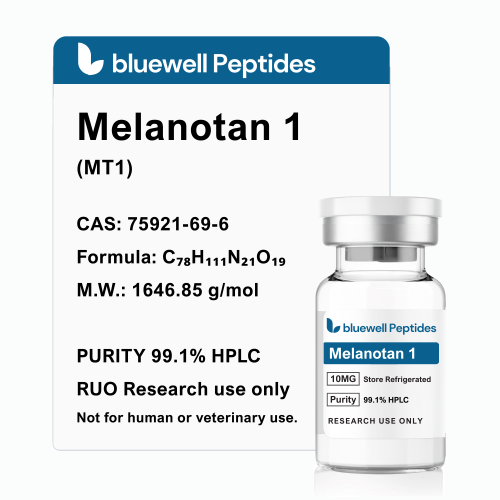
Melanotan 2 – melanocortin receptor research
A synthetic peptide investigated in laboratory models involving
melanocortin receptor signalling.
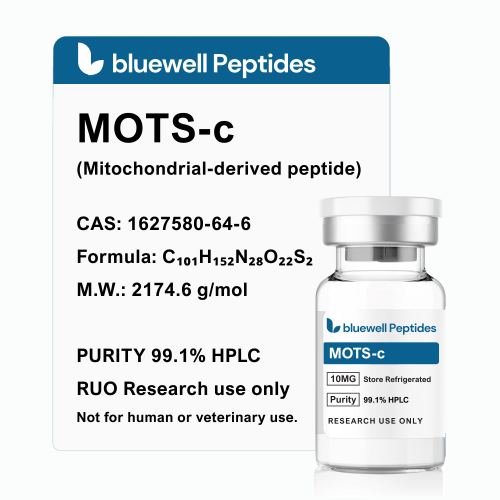
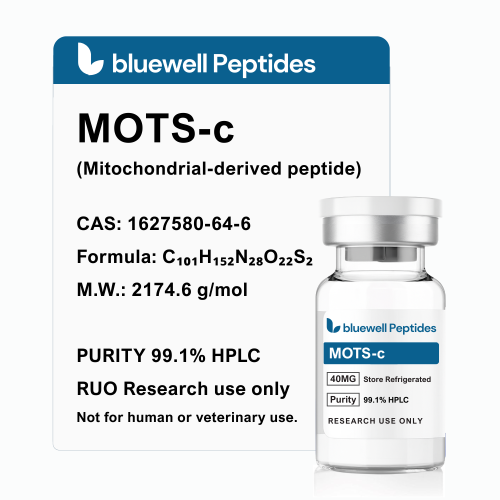
MOTS-c – mitochondrial peptide research
A mitochondrial-derived peptide studied in experimental models
involving cellular signalling and metabolism.
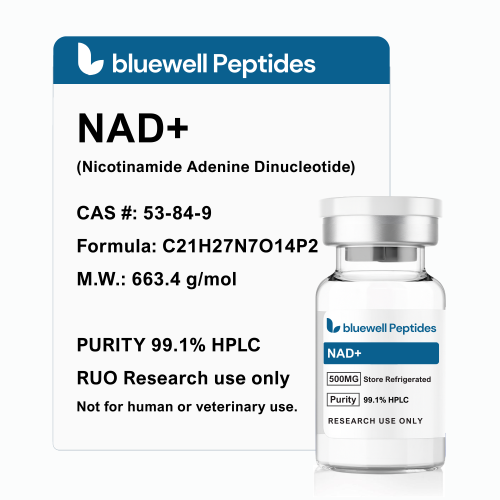
NAD+ – cellular cofactor research
NAD+ is widely studied in biochemical research involving
cellular metabolism, redox reactions and enzyme activity.
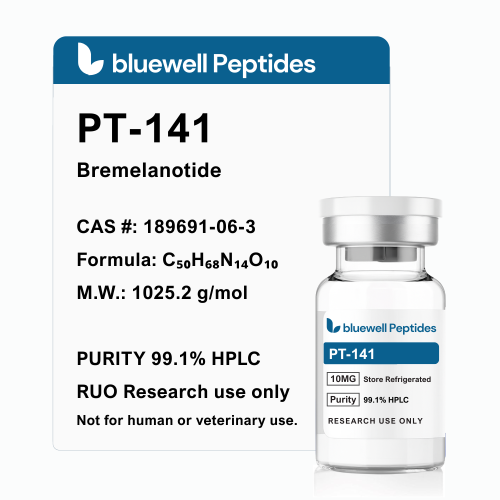
PT-141 – melanocortin receptor research
A synthetic peptide studied in controlled research models
involving melanocortin receptor signalling.
GLP-3 RT – multi-receptor research
An investigational research material studied in laboratory
models involving multiple receptor pathways.
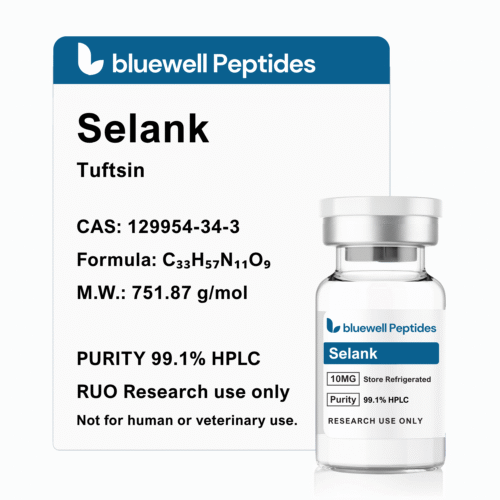
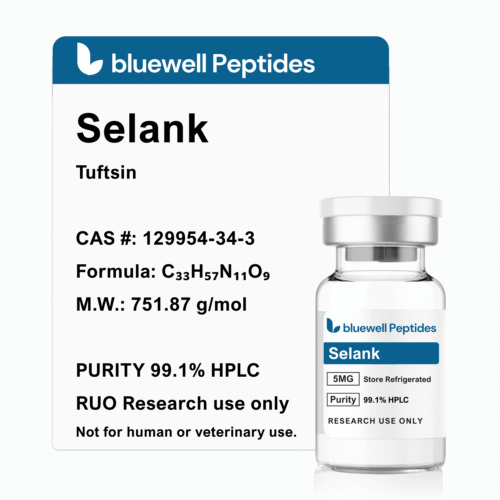
Selank – synthetic peptide research
A synthetic peptide used in experimental neuropeptide and
signalling research.
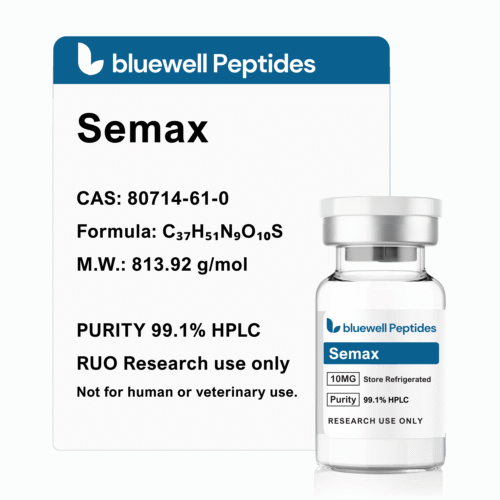
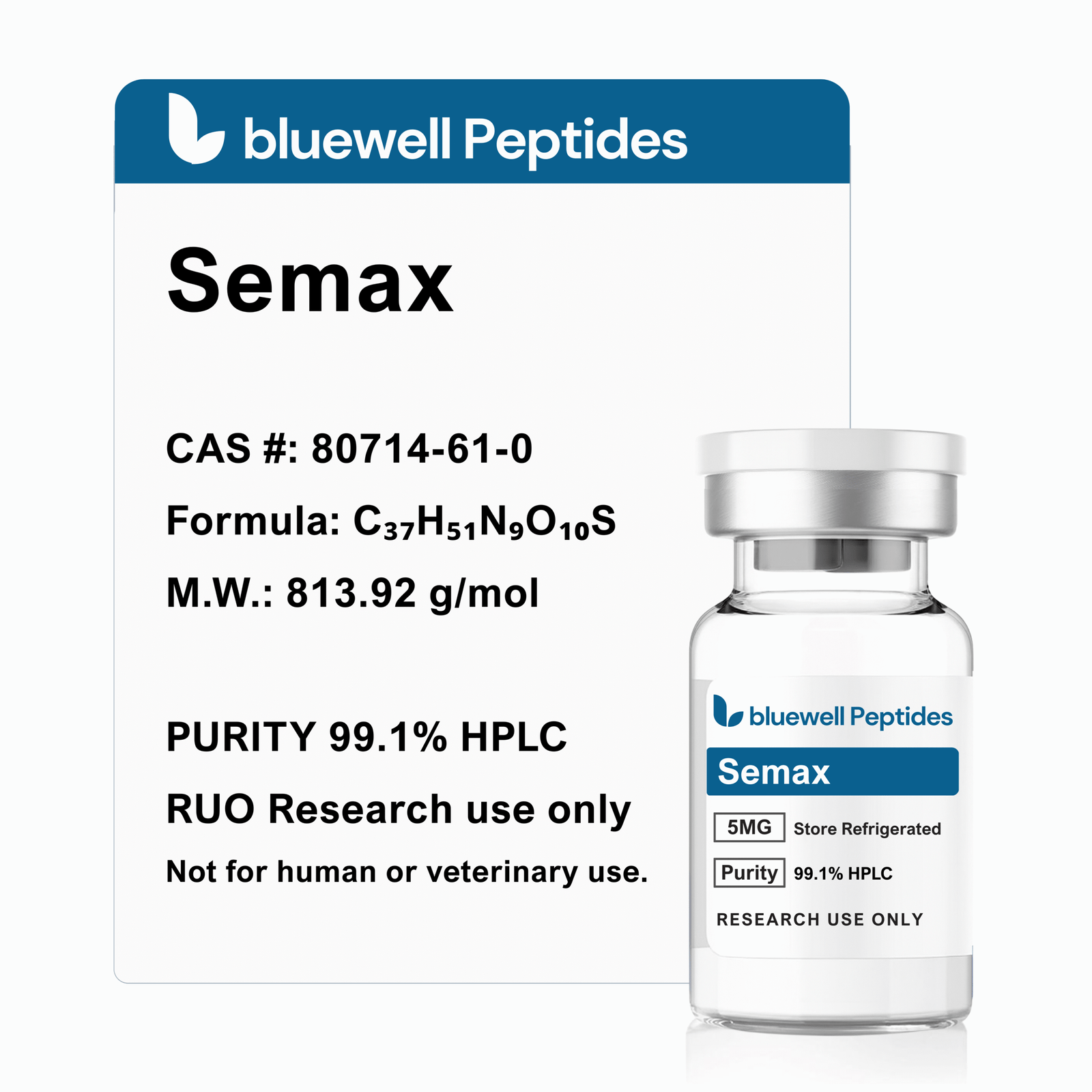
Semax – synthetic peptide research
A synthetic peptide studied in laboratory research involving
neuropeptide and cellular signalling pathways.
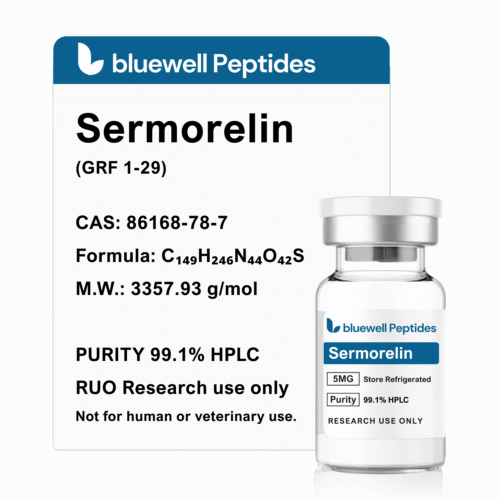
Sermorelin – GHRH pathway research
A peptide analogue studied in laboratory models involving
growth hormone-releasing hormone pathways.
Snap-8 – cosmetic peptide research
A synthetic peptide studied in cosmetic and skin-related
laboratory research.
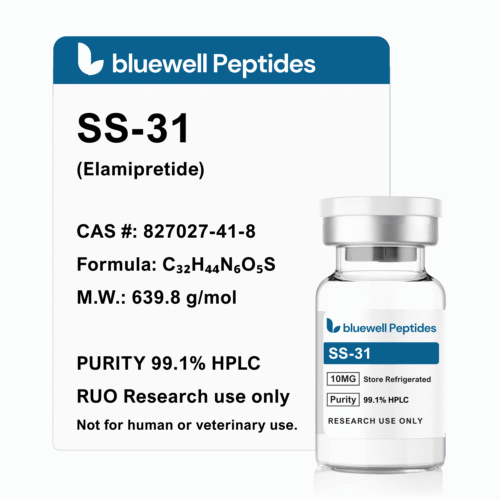
SS-31 – mitochondria-targeted peptide research
A research peptide studied in experimental models involving
mitochondrial biology and cellular processes.
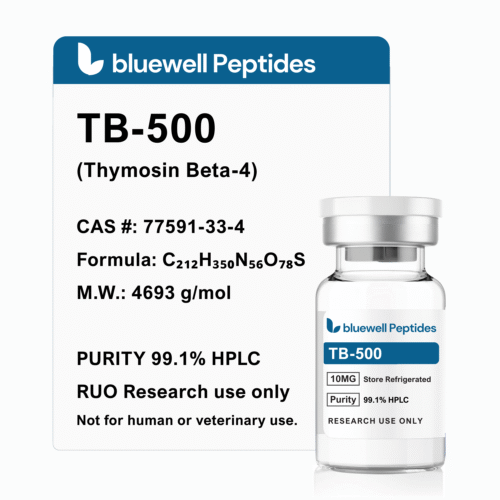
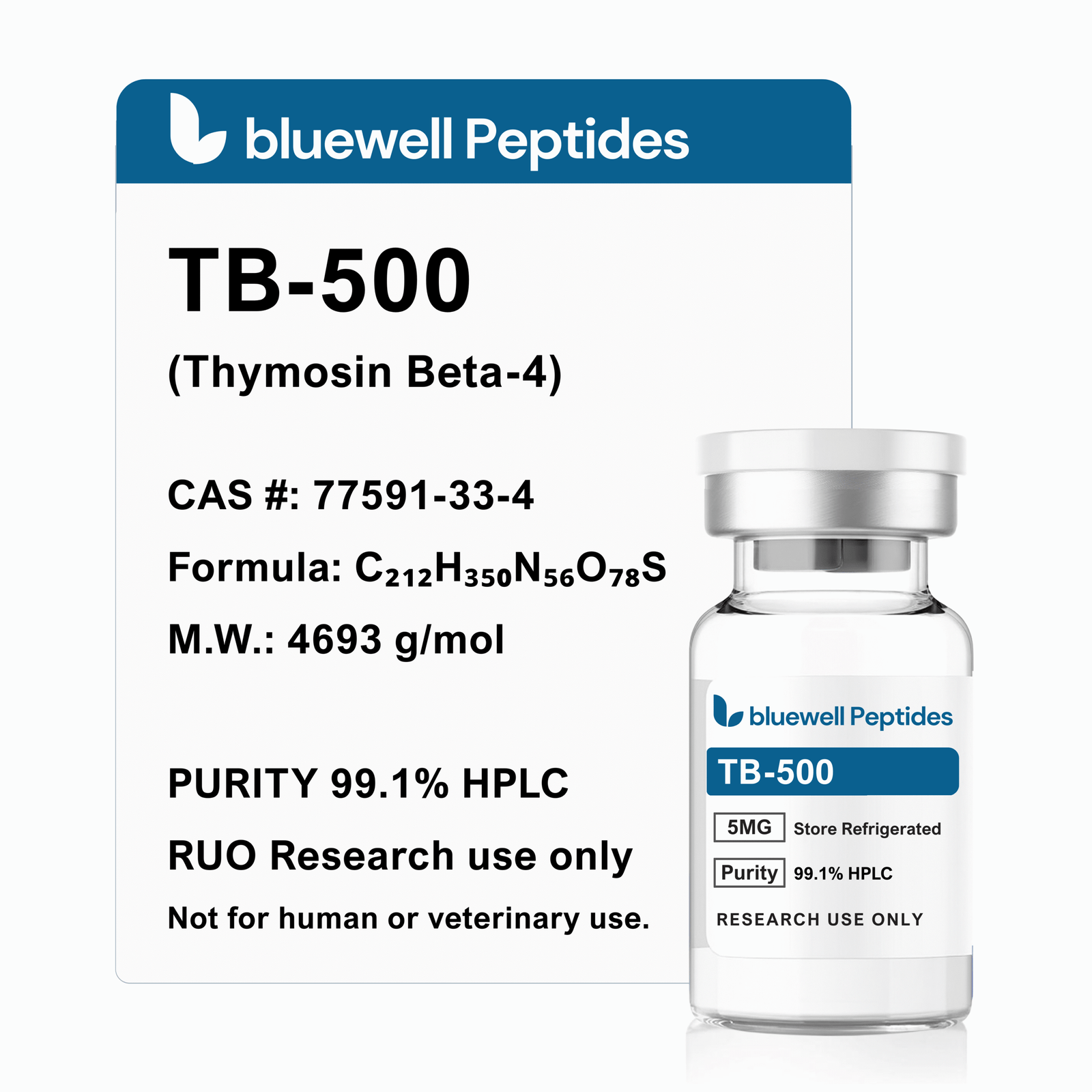
TB-500 – thymosin fragment research
A peptide fragment used in laboratory research involving
thymosin-related cellular and signalling pathways.
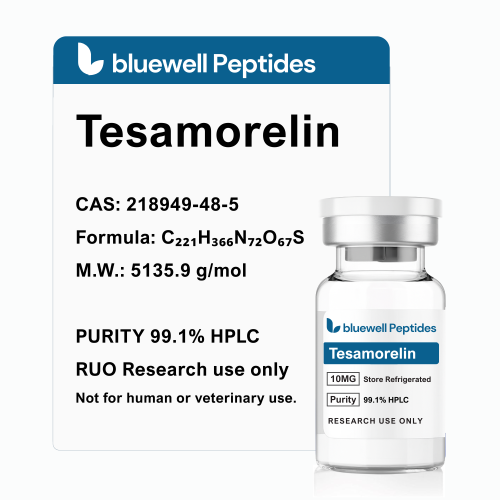
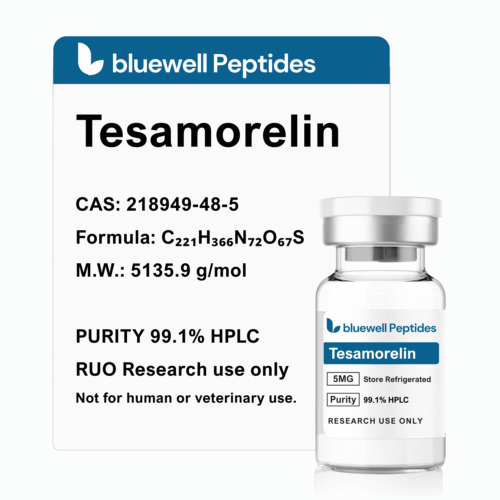
Tesamorelin – GHRH analogue research
A GHRH analogue studied in controlled laboratory research
involving endocrine signalling pathways.
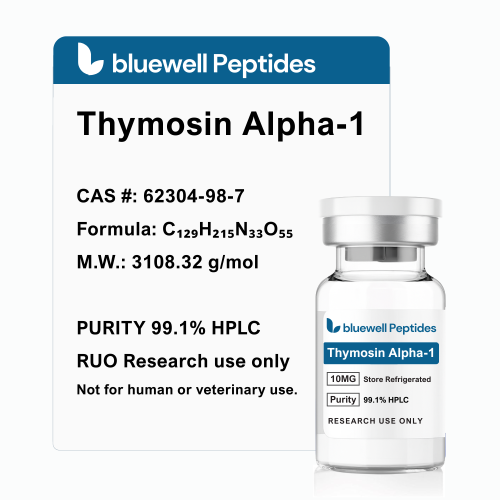
Thymosin Alpha-1 – thymosin research
A thymosin peptide investigated in laboratory research involving
cellular signalling and biological pathway models.
Product descriptions provide general research context only.
They do not constitute medical, clinical or therapeutic information.
How should research peptide materials be stored?
Storage requirements can vary between materials.
Keep products protected from unnecessary moisture, light and
temperature fluctuations and follow the information supplied
with the individual product or batch where available.
Why can storage requirements differ?
Stability can depend on the individual material, formulation,
packaging and environmental conditions. A single storage rule
should not be assumed to apply to every peptide.
What should I do if a research material changes appearance?
Unexpected changes in colour, clarity, texture or appearance
should be documented and assessed against the relevant product
information and laboratory procedure before further research use.
Do you provide storage information?
Storage and handling information is provided on relevant product
pages, documentation and within our
Resources & Guides
section where applicable.
When are UK orders dispatched?
We aim to dispatch eligible UK orders promptly.
Current dispatch cut-off times and available delivery services
are shown on the website and during checkout.
How are orders packaged?
Orders are packaged appropriately for transit.
Packaging may vary depending on the product, destination and
delivery service selected.
Do you ship internationally?
International delivery options are available for selected
destinations. Current availability and services can be viewed
on our
Delivery Information
page or at checkout.
Will I receive tracking?
Tracking information is provided where the selected shipping
service includes tracking.
Can delivery times vary?
Yes. Delivery times can be affected by carrier networks,
destination, customs processing and other factors outside
Bluewell's control.
Are Bluewell products intended for human use?
No. Bluewell does not market or supply its peptide products
for human or veterinary consumption, administration,
medicinal, therapeutic or diagnostic use.
Does Bluewell provide dosing or administration advice?
No. Bluewell does not provide human or veterinary dosing,
prescribing or administration guidance.
Do you sell injection devices?
Bluewell does not supply injection pens, autoinjectors,
needles or similar administration devices as part of its
research peptide catalogue.
What form are products supplied in?
The physical form, quantity and product information for each
research material are stated on the relevant product page.
Are Certificates of Analysis available?
Analytical documentation is available for products and batches
where listed. Researchers should refer to the relevant product
page or
COA library
for currently available documents.
Who is responsible for determining whether a product is suitable for research?
Researchers and purchasers are responsible for determining
whether a material, its documentation and its use are appropriate
for their research and for complying with requirements applicable
to their activities.
What payment methods are available?
Current payment options are shown during checkout.
Availability may vary depending on order type, destination
and payment provider.
Where can I find research resources and documentation?
Visit our
Resources & Guides
section for research-focused information, product documentation
and laboratory resources.
Bluewell Peptides is a UK-based supplier of research peptides for laboratory, analytical, and scientific research.
Our product pages include clear specifications, batch information, and available Certificate of Analysis (COA) documentation to help researchers review the materials they are ordering.
We focus on straightforward product information, reliable UK fulfilment, tracked delivery options, and easy access to supporting documentation.
Researchers can also explore our Resources & Guides hub for laboratory-focused information, product documentation, storage guidance, and research resources.
All Bluewell Peptides products are supplied strictly for laboratory and scientific research purposes only. They are not marketed or supplied for human or veterinary use.
×Bluewell Safety Update We are aware that there appear to be a few fake websites pretending to be Bluewell by slightly changing the website URL. These websites have been reported and we expect them to be taken down shortly.
In the meantime, just for clarification, the only official Bluewell website is
bluewellpeptides.com.
Please make sure you are on our official site before making any purchase.
Join WaitlistEnter your email address to be notified when this item becomes available.